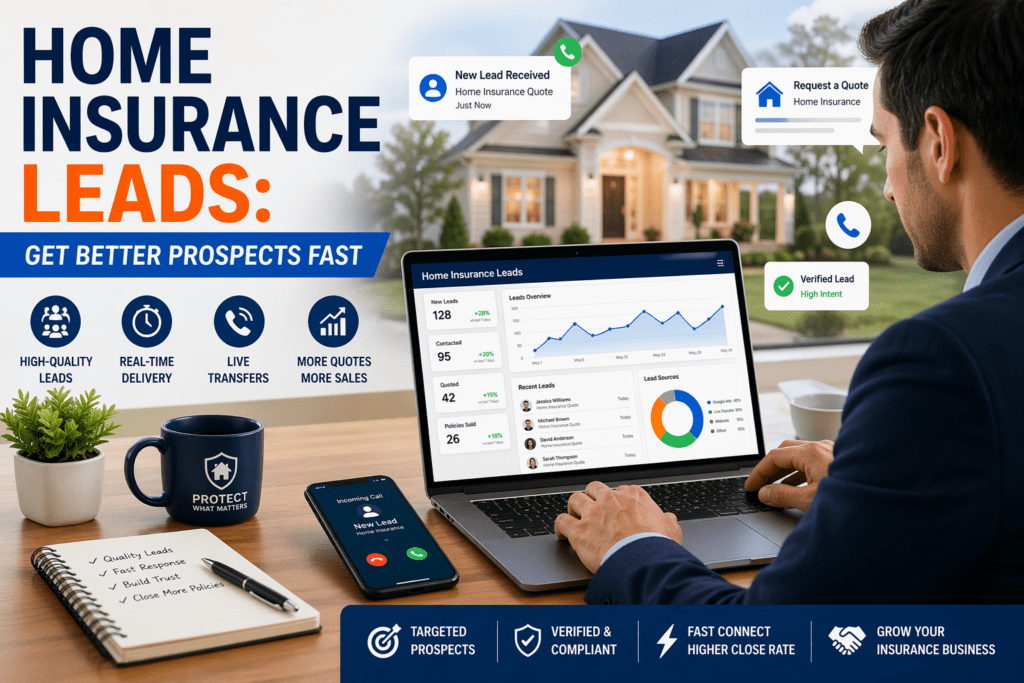
Are you buying home insurance leads and still feeling like too many of them go nowhere?
That can be frustrating. You invest time, money, and energy into follow-up, but some leads never answer, some are not ready, and some were never a good fit in the first place.
The good news is that the problem is not always the idea of buying leads. In many cases, it is the type of lead, the speed of follow-up, or the system behind it.
If you want better results, you need more than a list of names. You need a smarter way to find, sort, and convert the right prospects.
Today’s market gives agents several options. You can buy exclusive home insurance leads, test real-time home insurance leads, work with live transfer home insurance leads, or build your own lead generation process over time. The best choice depends on your budget, your sales workflow, and how quickly your team can respond.
What Are Home Insurance Leads?
Home insurance leads are people who have shown interest in homeowners’ coverage. They may be comparing policies, looking for a new quote, buying a home, switching carriers, or reviewing their current plan.
In simple terms, a lead is a chance to start a conversation with someone who may need coverage.
 That sounds easy, but not every lead is the same. Some are fresh and highly motivated. Some are shared with multiple agents. Some are older-aged leads that need careful follow-up. Others come in as live calls, which can move much faster.
This is why lead quality matters more than lead volume. A smaller number of strong leads can beat a large batch of weak ones every time.
Why Home Insurance Leads Matter for Agents
A strong pipeline helps agents grow with more confidence. When you have a reliable flow of prospects, it becomes easier to book calls, write policies, and plan for the months ahead.
Good home insurance leads can help you:
- spend less time chasing cold prospects
- Speak to people who are already looking for coverage.
- create more chances to cross-sell auto or umbrella products,
- build a steadier sales process
That is also why so many current ranking pages focus on “high-intent” shoppers, verified data, and faster delivery. The message is simple: agents want prospects who are more likely to convert.
Types of Home Insurance Leads
Not all leads work the same way. Before you buy anything, it helps to know the main categories.
Exclusive Home Insurance Leads
Exclusive home insurance leads are sold to a single agent. That means you are not racing several other agents to reach the same person. These leads often cost more, but they can offer stronger conversion potential because the competition is lower.
Shared Home Insurance Leads
Shared leads are sold to multiple buyers. They are usually less expensive, but they also create more pressure on response time. If you buy shared leads, speed matters a lot.
Real Time Home Insurance Leads
Real-time home insurance leads are delivered soon after a prospect submits their details. These leads are valuable because the shopper is still actively thinking about coverage. Fresh intent often leads to higher contact rates.
Live Transfer Home Insurance Leads
Live transfer home insurance leads connect a prospect directly with an agent via phone. This format can work well for teams that are good on the phone and prefer immediate conversations rather than long follow-up cycles. Current SERP pages strongly focus on live transfer and pay-per-call models. This shows a major commercial angle in the market. (resultcalls.com)
Aged Home Insurance Leads
Aged leads are older inquiries that did not close right away. These leads are usually more affordable, but they need better scripts, better timing, and more patience.
What Makes a Good Home Insurance Lead?
A good lead is more than a name and a phone number. It should show genuine interest and fit your target market.
Look for leads with:
- correct contact details
- clear interest in home coverage
- location fit for your service area
- recent activity
- a real need for quotes or policy review
You should also ask a lead provider simple questions before you buy:
- Is the lead exclusive or shared?
- How fresh is the lead?
- How is it verified?
- What filters can I choose?
- Is there a replacement policy?
These questions help you protect your budget and avoid poor-fit data.
How to Choose the Right Home Insurance Lead Provider
This is where many agents make mistakes. They compare only on price, then wonder why the results feel weak. To avoid picking a poor lead provider, watch for red flags like unclear pricing and hidden fees. Also watch for unclear lead sources, no return policy, or vague answers to your questions.
Be cautious if a provider has poor online reviews, uses high-pressure sales tactics, or refuses to share references. Taking a few extra minutes to research can help you avoid costly mistakes and unreliable vendors.
A better approach is to compare providers on value.
- lead type
- delivery speed
- exclusivity
- filters
- replacement rules
- contact quality
- reporting
- contract terms
Many provider pages highlight benefits like verified leads, real-time delivery, filters, and fair return policies. Those details matter because they affect both your risk and your results. (Insurance Leads)
Should You Buy Home Insurance Leads or Generate Your Own?
Buying leads can help you increase volume faster. It is useful if you need opportunities now, want to test a new market, or already have a sales process ready.
Generating your own leads can help when you want more control. SEO, paid ads, landing pages, referrals, and email marketing can build a stronger long-term system around your brand. Some recent industry guides recommend a mixed strategy. Buy leads for speed. Also, build your own pipeline for stability.
In many cases, that is the best path:
- Buy for short-term momentum.
- build for long-term growth
How to Convert More Home Insurance Leads
Buying better leads is only half the job. The other half is turning those leads into real conversations and real policies.
Here are a few practical ways to improve conversion:
- Respond Fast
Fresh leads cool down quickly. A quick response gives you a better chance to connect while interest is still high.
- Use a Clear Script
Keep your language simple. Ask what the prospect needs, what kind of property they want to insure, and what matters most to them.
- Personalize Follow-Up
A short, personal message will often work better than a generic sales script. Show the prospect that you understand why they reached out.
- Use More Than One Channel
Calls, texts, voicemail, and email can work better together than one method alone.
- Track Results by Source
Not every vendor performs the same way. Measure contact rate, quote rate, close rate, and cost per acquisition.
Common Mistakes Agents Make
Some agents assume all poor results come from bad leads. That is not always true.
Common mistakes include:
- slow response times
- focusing only on low price
- failing to track lead source quality
- using one script for every prospect
- giving up after one or two follow-ups
When you fix those issues, even average leads can perform better. When you combine a strong process with higher-quality leads, results usually improve much faster.
FAQ SECTION
What are home insurance leads?
Are exclusive home insurance leads better?
What are live transfer home insurance leads?
How much do home insurance leads cost?
How can I improve lead conversion?
Final Thoughts
Home insurance leads can absolutely help you grow, but only when you choose the right type and manage them with the right system. If you want less competition, exclusive home insurance leads may be the better fit. If you want fast conversations, live transfer home insurance leads may work well.
If timing matters most, real-time home insurance leads are a strong choice. If you want more control, build your own lead generation engine. Keep testing other lead sources, too.
The smartest approach is not to chase the cheapest option. It is to find the lead source that fits your workflow, respond fast, and track what really turns into revenue.
